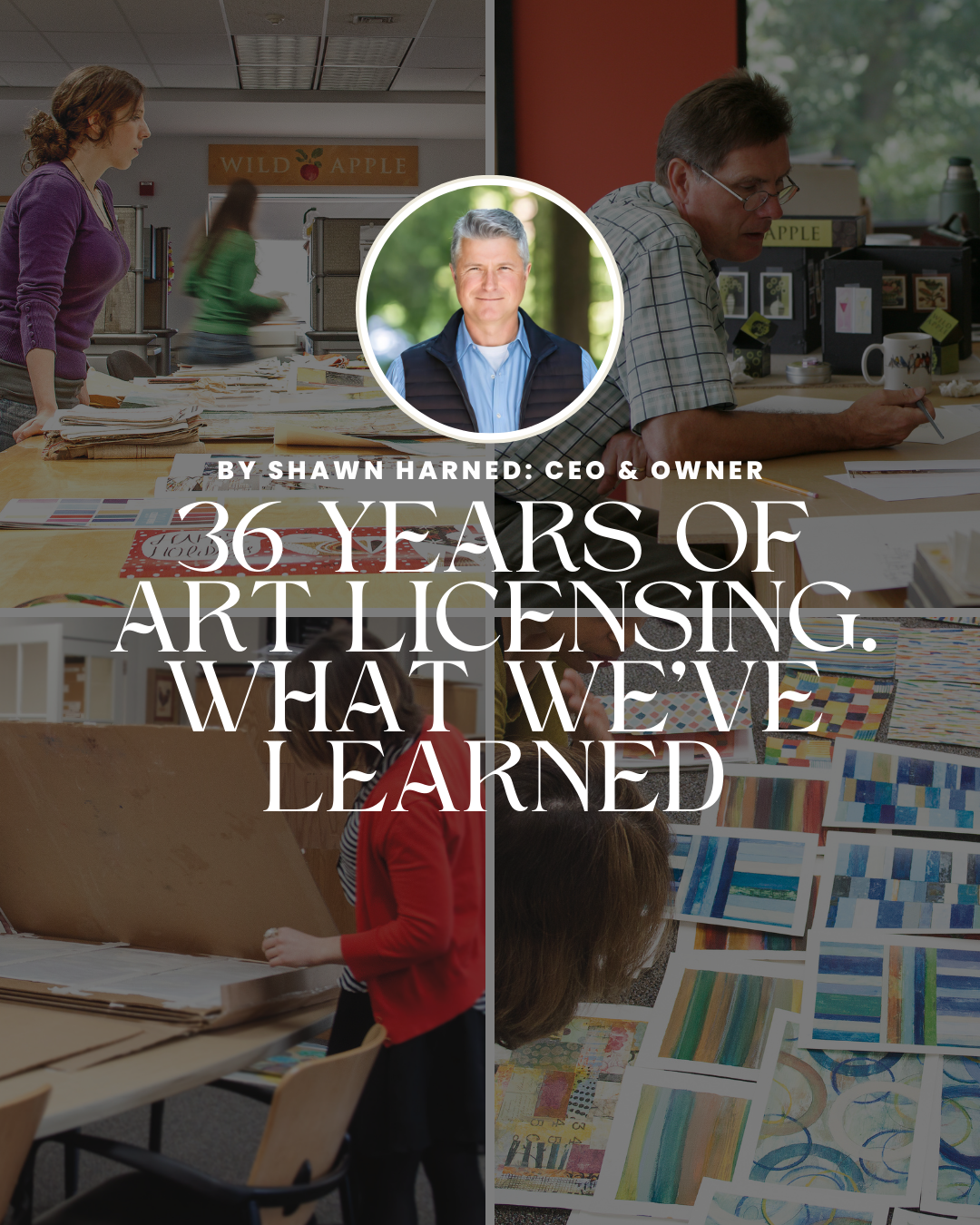
By Shawn Harned, CEO and Owner
When we think about art licensing, there is a lot to reflect on over 36 years.
In 1990, Wild Apple began as a small art publishing and licensing company with a simple belief. Art makes the world more beautiful.
Over the past three and a half decades, a lot has changed. The home decor industry has evolved, technology has reshaped how art is created and delivered, and the pace of retail has accelerated dramatically. Yet through all of that change, the heart of our business has stayed remarkably consistent.
Great artists. Great people. Great partnerships.
When the founders of Wild Apple, the Chesters, decided to retire in 2022, they began to look for a buyer but wanted to make sure that what they had built would continue. They wanted someone who understood the company and the people and who believed in the same core values that had guided the company from day one. In my role as the Chief Operating Officer, the Chesters and I decided the best way to ensure that their vision lived on and that we maintained continuity for the artists, the customers and the Wild Apple team was for me to purchase the company.
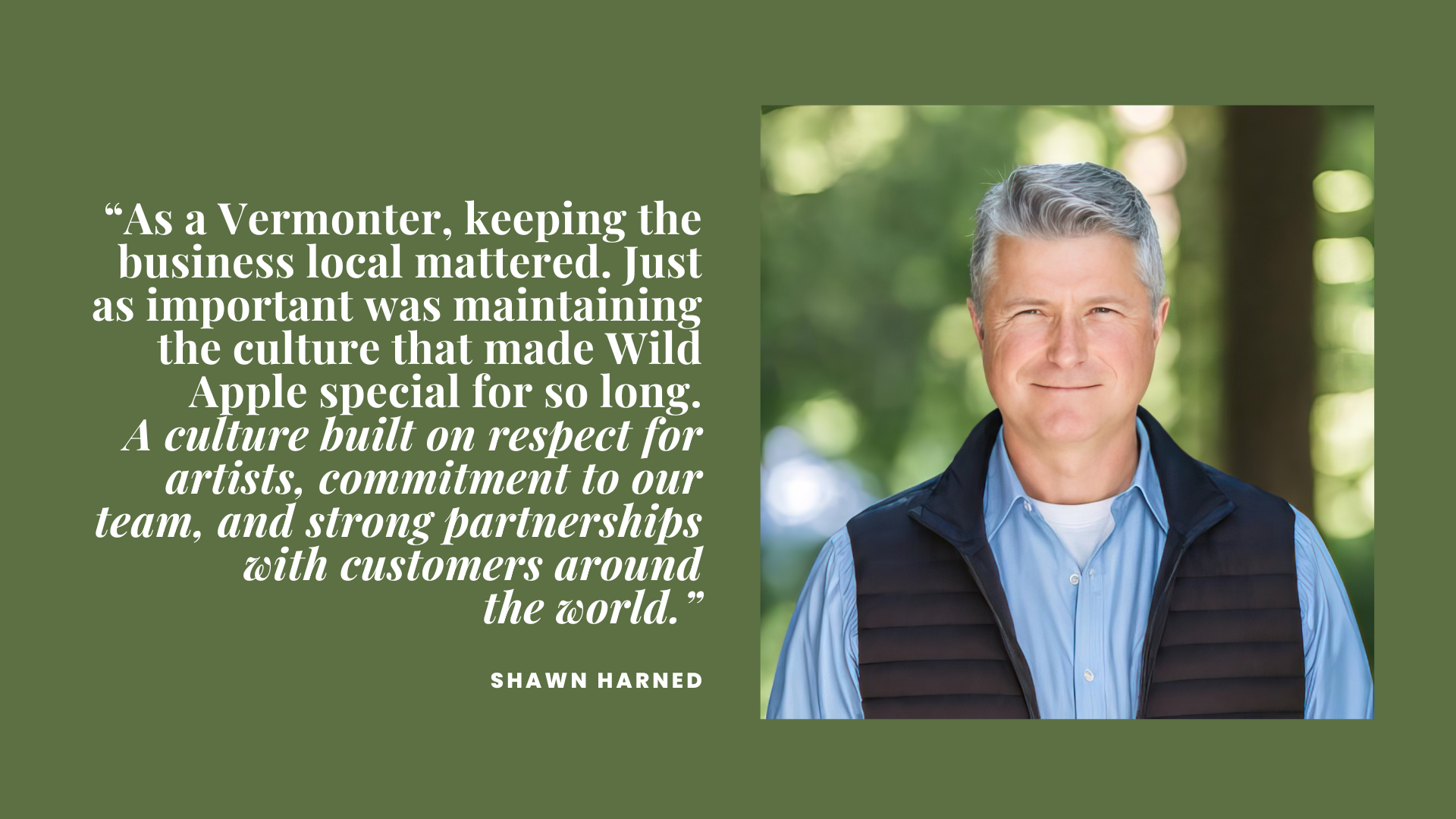
As a Vermonter, keeping the business local mattered. Just as important was maintaining the culture that made Wild Apple special for so long. A culture built on respect for artists, commitment to our team, and strong partnerships with customers around the world.
Now, after 36 years in business, it is worth reflecting on what we have learned about art licensing along the way.
Artists Are the Heart of Everything
From the beginning, Wild Apple has been an artist-driven company. In the early years, we worked with a handful of creators. Today, we are proud to collaborate with more than 90 artists from around the world.
They are the reason our collections exist. They bring the creativity, imagination, and perspective that keep our catalogue fresh and relevant month after month and year after year.
One of the things I am most proud of is our long-standing commitment to artists. In 36 years, we have never missed a royalty payment. Not once. Many of the artists we work with have been with us for decades, and a few have been part of the Wild Apple family since nearly the beginning. That kind of relationship comes from trust, transparency, and the shared goal of building something meaningful together.
As the art licensing industry continues to grow, our belief remains simple. Real artists matter. Their work brings depth, emotion, and originality that cannot be replicated any other way.
People Build Great Companies
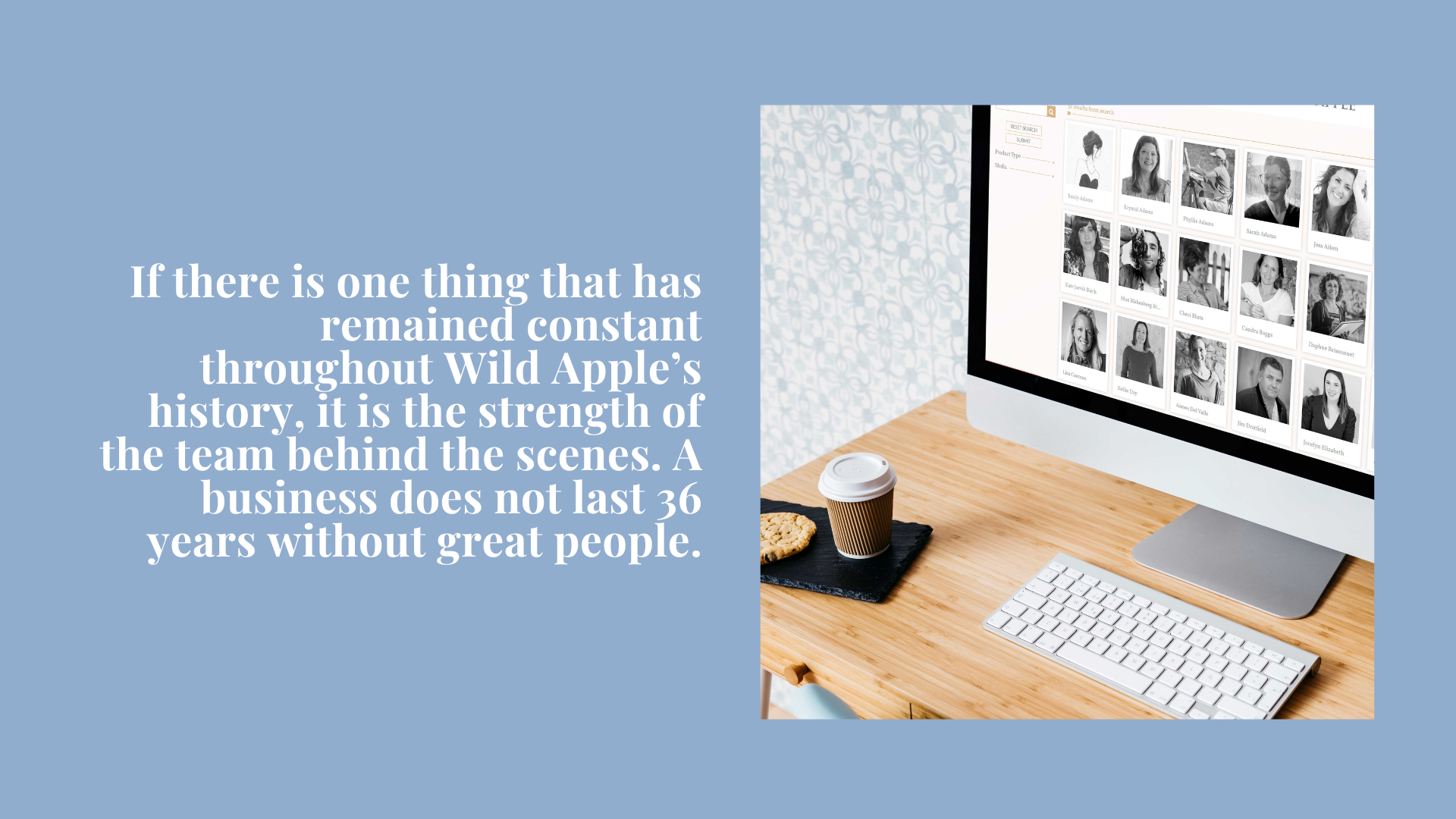
If there is one thing that has remained constant throughout Wild Apple’s history, it is the strength of the team behind the scenes. A business does not last 36 years without great people.
We have multiple members of our team that have been with Wild Apple for more than 20 years, and the average tenure at Wild Apple is over 16 years. That kind of stability says a lot about the culture that we have built here.
We believe in treating people with respect, listening to their ideas, and allowing them to be creative problem solvers. When employees feel valued, they bring their best work forward. That energy shows up in everything we do, from artist relations to customer service.
The team at Wild Apple truly cares about the work. And that makes a difference.
So Many Things About the Art Licensing Industry Has Changed Dramatically
When Wild Apple started, the business looked very different from what it does today. Back then, the model was built around printed posters. Art was produced, stocked in our warehouse and shipped to retailers and distributors around the world. Inventory management and logistics were central to the business.
Today, the industry operates in a much more flexible way.
- Print-on-demand technology allows manufacturers, retailers, and designers to produce exactly what they need, when they need it.
- Art licensing allows artwork to appear across a wide range of products, including wall decor, stationery, textiles, dinnerware, giftware, and more.
- Digital delivery means artwork can move across the globe instantly rather than being shipped in boxes.
The core idea remains the same. Beautiful art connects with people. But how that art reaches customers has evolved dramatically. For companies in the home decor industry, this shift has created new opportunities to move faster, test new ideas, and build more dynamic product lines. It’s an exciting time to be creating and licensing art.
Technology Has Elevated What’s Possible in Art Licensing
One of the most exciting changes over the past thirty-plus decades has been the evolution of digital technology.
- Today’s art files are incredibly sophisticated. High-resolution artwork can be scaled to almost any size while maintaining exceptional quality. A piece of art that works beautifully as a framed print can also become a large-scale mural or a design element on a variety of products. Those files can be easily shared via Digital Asset Management and can be in the hands of our customers in a matter of seconds.
- Technology has also made collaboration easier and faster. Our team can work closely with artists and customers anywhere in the world to prepare files, customize artwork, and move projects forward quickly.
- What this really means is that we can spend more time doing what matters most. Supporting artists. Serving customers. And creating new work that keeps collections fresh and relevant.
Staying True While Looking Ahead
The art world is constantly evolving. Trends change. Technologies shift. New tools emerge.
Recently, artificial intelligence has entered the conversation in a significant way. While AI is becoming part of the broader creative landscape, our focus remains firmly on human creativity.
Art has always been about expression, perspective, and connection. Those qualities come from people. They come from artists who bring their experiences, observations, and imagination into their work. For Wild Apple, supporting human-powered creativity continues to be central to who we are, and that’s why we don’t work with AI artists or create AI art.
- But that doesn’t mean we are anti-AI. When it comes to business processes, we have embraced AI-powered tools that help us work more efficiently and effectively. We use AI every day to streamline repetitive design tasks, manage workflows, and expedite customer orders.
- We remain focused on the future. We continue to invest in technology, expand our artist roster, and explore new ways to help manufacturers, retailers, and designers bring great art to market.
Making the World More Beautiful with Art
When I think about the past 36 years, what stands out most is the community that has grown around Wild Apple.
Artists who trust us with their work. Customers who build products and collections with our art. Employees who bring dedication and creativity to the company every day.
Together, that community has helped Wild Apple grow from a small art publisher into a global art licensing company.
The industry will continue to change, just as it always has. But our purpose remains the same as it was in 1990. To make the world more beautiful with art.
After 36 years, we are just getting started.
Q&A About Wild Apple Art Licensing: 36 years of growth
Question: Why did Wild Apple remain in Vermont, and how did the 2022 ownership change preserve its values?
Short answer: When the founders, the Chesters, retired in 2022, they sought a values-aligned transition that protected the culture, artists, customers, and team. As then-COO and a Vermonter, Shawn Harned purchased the company to ensure continuity—keeping the business local, sustaining trusted relationships, and maintaining the respect-for-artists, people-first ethos that has defined Wild Apple since 1990.Question: What does it mean that Wild Apple is “artist-driven” in practice?
Short answer: Artists are the core of the company’s collections and success. Wild Apple collaborates with 90+ artists worldwide, has never missed a royalty payment in 36 years, and maintains many decades-long relationships grounded in trust and transparency. Day-to-day, the team partners closely with artists to prepare and customize files, develop new work, and keep collections fresh and relevant.Question: How has the art licensing model evolved since the early poster days?
Short answer: The business moved from printing and warehousing posters to a flexible, digital-first ecosystem. Today, print-on-demand and instantaneous digital delivery let partners produce exactly what they need, when they need it, and license art across categories like wall decor, stationery, textiles, dinnerware, and giftware, enabling faster testing, quicker response to trends, and more dynamic product lines.Question: In what ways has technology elevated quality and collaboration without replacing artists?
Short answer: High-resolution digital files can scale from framed prints to large murals while preserving quality, and Digital Asset Management enables secure, instant global sharing. These tools speed up file prep and customization and streamline collaboration among artists, customers, and the Wild Apple team, freeing more time to support creators and serve customers, while keeping human originality at the center.Question: What is Wild Apple’s stance on AI in creativity and operations?
Short answer: Wild Apple does not create AI-generated art or work with AI “artists,” because the company prioritizes human expression, perspective, and connection. However, it actively uses AI-powered tools behind the scenes to streamline repetitive design tasks, manage workflows, and expedite customer orders, so the team can focus more on artists, partners, and great art.