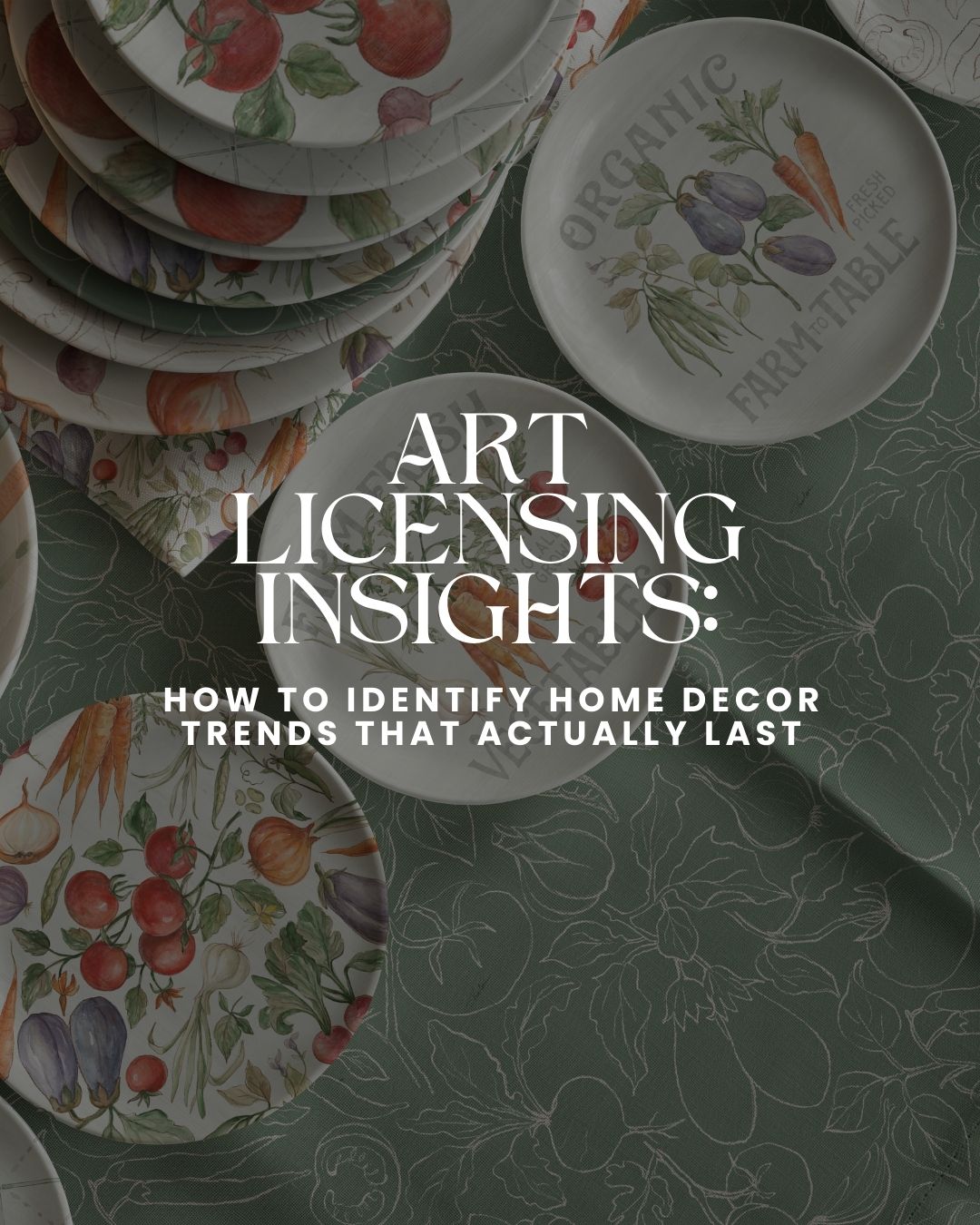
In the world of home decor, inspiration is everywhere. Beautiful rooms, polished product shots, and perfectly styled interiors fill our feeds and inboxes daily. For art buyers, that abundance has changed the job. The challenge is no longer finding ideas, but deciding which ones are worth committing to long-term.
When trends move faster than product timelines, art licensing decisions require a different kind of focus. Experienced licensors, manufacturers, and retailers understand that visual appeal alone does not guarantee success on shelves. Longevity comes from recognizing patterns that translate beyond a moment and into real homes to real people.
That does not mean fast-moving trends do not have a place.
Some looks are designed to move quickly, create excitement, sell through, and then make room for what comes next. Those moments can be powerful and profitable. What this conversation focuses on is different. What we are talking about is how to identify trends with shelf presence, reorder potential, and the ability to support licensed collections over time.
1. Look for Trends That Align with How People Are Decorating
Trends that last tend to show up alongside broader shifts in interior design. They connect naturally with changes in color, material, and lifestyle preferences rather than existing as isolated visual moments. Art buyers who evaluate trends through an art licensing lens look beyond individual images. They pay attention to what is happening across furniture, fashion, colors and more. When art feels at home within those environments, it is more likely to resonate long-term at retail.
2. Pay Attention to How a Trend Develops
Home decor trends rarely appear fully formed. Those with staying power usually surface gradually, evolving through different interpretations before becoming familiar. If a look arrives suddenly and feels complete right away, it often lacks the depth needed to support a full licensed collection. Experienced buyers look for variation and experimentation rather than identical executions. That progression is a strong signal that a trend is being explored and adopted, not just repeated.
3. Consider How the Art Lives in Real Homes
A well-styled image can make any piece look compelling. Art licensing decisions benefit from thinking beyond the styled setting. Buyers with experience consider how the artwork will feel once it becomes part of a home. Does it layer easily with existing decor. Will it remain comfortable over time? Can it move across rooms and environments without feeling overly specific? Art that lives well tends to perform better than art that only photographs well.
4. Follow Buying Behavior Over Time
Engagement and excitement can be useful indicators, but they are not the full story. Trends that last often build momentum slowly. Consistent demand, repeat orders, and long-term performance provide clearer signals than sudden spikes. Buyers who track these patterns are better positioned to identify trends that are worth investing in and those best left behind.
5. The Importance of Editing and Experience
Art licensing is as much about restraint as it is about discovery. Experienced licensors help buyers narrow their focus, provide context, and translate inspiration into product-ready direction. Thoughtful editing reduces risk and helps collections feel intentional rather than reactive.
PS – This approach will become increasingly valuable as visual noise continues to grow.
Where Wild Apple Adds Value
At Wild Apple, trend insight is shaped by decades of working with manufacturers, retailers, and professional artists. Our collections are curated with longevity in mind, focusing on artwork that scales across products, formats, and seasons.
By combining market awareness with production-ready art, we help partners make confident art licensing decisions that support both creativity and commercial success.
A Quick Guide for Art Buyers: Before committing to a home decor trend, consider:
- Does this trend align with broader interior and lifestyle shifts
- Can it support multiple designs within a licensed collection
- Will the artwork reproduce well across sizes and materials
- Does it feel comfortable in real homes over time
- Is demand building steadily rather than peaking quickly
If most of these answers are yes, the trend is far more likely to last.